

TLDR:
Day 42 of Be Qur'anic explores Ayah 25 of Surat al-Baqarah, contrasting the previous verse's warning of Jahannam with the promise of Jannah for those with faith and righteous deeds.
This ayah exemplifies the Qur'anic balance between fear and hope, encouraging believers with visions of lush gardens and eternal rewards that surpass human imagination.
The mention of fruits symbolises the luxury and abundance awaiting the faithful, with the assurance that joys familiar on Earth will be infinitely enhanced in the hereafter.
It's a reminder that the ultimate reward of Jannah is accessible through living a life of deep faith and good deeds, inspiring us to strive for this eternal abode while navigating the trials of this world.
Welcome to Day 42 of Be Qur'anic, where we immerse ourselves in the profound wisdom of the Qur'an, extracting invaluable lessons and integrating them into our daily existence to lead a life more aligned with its divine teachings.
Insha'Allah, today, we delve deeper into our study of Surat al-Baqarah, directing our focus towards Ayah 25. This particular verse serves as a harmonious continuation of the discourse initiated in Ayah 24. In the preceding verse, Allah Azza wa Jal extends a solemn reminder of the looming threat of Jahannam for those who choose to disregard the Qur'an after it has been graciously presented to them. The ayah starkly commands, "Fattaqun-nar," urging an immediate consciousness and fear of the inferno, fuelled not just by inanimate objects but by souls led astray.
Ayah 25, however, shifts the narrative from admonition to assurance, encapsulating the promise of Jannah for the faithful. This juxtaposition of divine promise and warning is a recurrent theme throughout the Qur'an, meticulously weaving a tapestry of hope and fear. It is this delicate balance between 'khawf' (fear) and 'rajaa' (hope) that forms the cornerstone of our spiritual journey towards Allah Azza wa Jal. It is likened to two wings that elevate us, keeping our spiritual ambition soaring towards the divine.
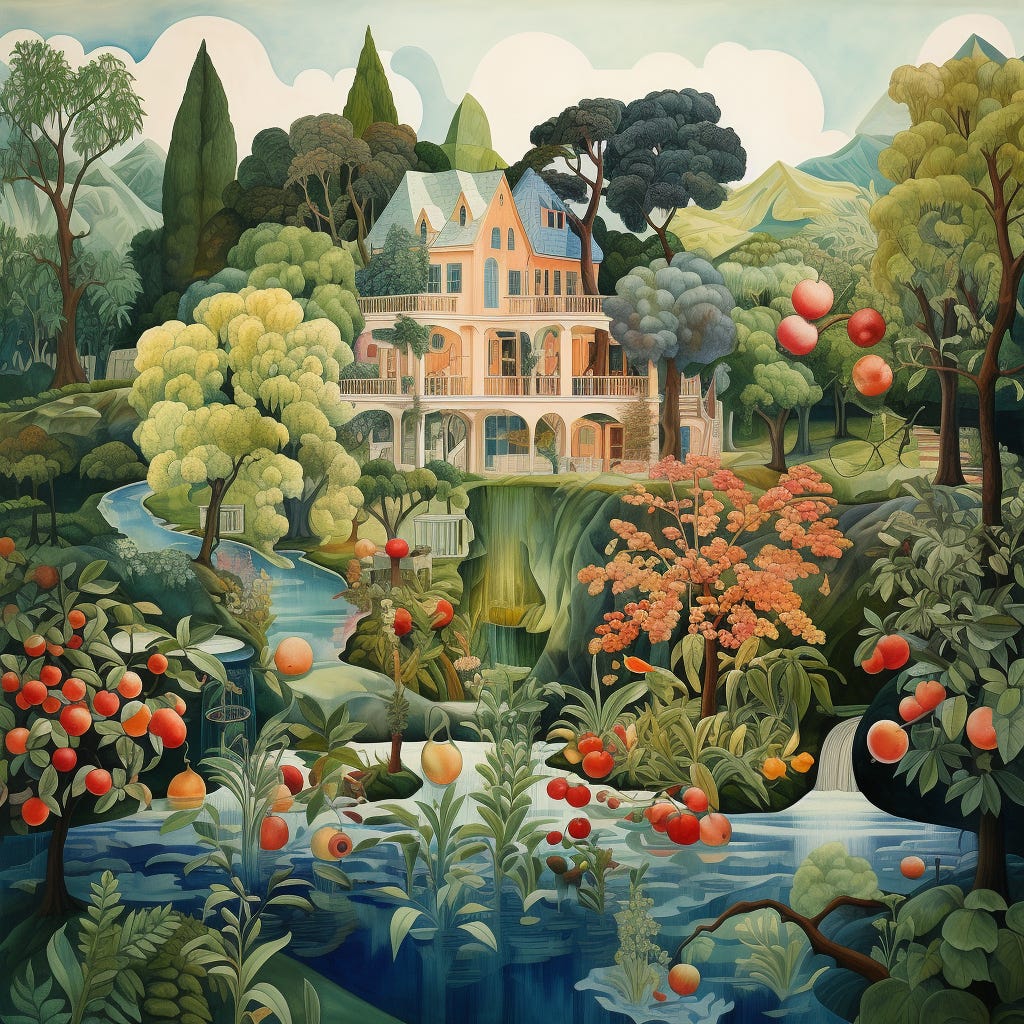
The ayah joyously proclaims glad tidings to those who believe and engage in righteous deeds, promising them gardens beneath which rivers flow - a depiction of Jannah that resonates deeply within the Qur'anic revelation. Interestingly, the term 'Jannah' shares its etymological roots with 'Jinn', illustrating the unseen and unfathomable nature of both. The imagery of lush, verdant gardens is particularly evocative, promising an eternal abode far removed from the arid deserts of earthly existence.
Ibn Abbas, a companion renowned for his deep understanding of the Qur'an, emphasises that the descriptions of Jannah, while linguistically familiar, signify a reality beyond our earthly comprehension. The delights of Jannah, as described, may utilise familiar terms but promise an experience 'that no eye has seen, no ear has heard, and no heart has imagined.'
As we delve into the specifics of the divine promise, Allah draws attention to the provision of fruits within Jannah. This mention is not trivial; it symbolises the ultimate luxury and abundance awaiting the faithful. In a world where sustenance is a constant pursuit, fruits represent a tier of luxury beyond the basic necessities of bread, protein, and vegetables. Their mention in the context of Jannah signifies a realm where all forms of sustenance and luxury are abundant and assured.
What's more, the ayah reveals that inhabitants of Jannah will recognise these fruits, drawing parallels with their earthly experiences yet finding the heavenly counterpart infinitely superior. This aspect of Jannah hints at a continuity of consciousness, where memories of earthly life enrich the afterlife experience, allowing for a profound appreciation of divine bounty.
Questions often arise regarding the specifics of Jannah's delights, especially from the curious minds of the young. While the Qur'an mentions fruits like figs and grapes, it is crucial to understand that these references cater to the context of its initial revelation. Yet, Allah assures us that whatever brought us joy in this life, be it as simple as a favoured fruit or as delightful as ice cream, will find its place in Jannah, only infinitely enhanced.
The narrative then extends to the companionship in Jannah, highlighting the presence of purified spouses, reinforcing the idea that joy in Jannah encompasses all facets of existence - physical, emotional, and spiritual. This eternal abode promises not just sustenance and comfort but a completion of being in the company of pure souls, forever basking in divine grace.
As we reflect upon the beauty of Jannah described in Ayah 25, it serves as a powerful motivator, a reminder of the ultimate reward awaiting those who live a life of faith and righteousness. It encourages us to view the transient beauty of this world as a mere reflection of the eternal beauty that awaits in the hereafter, urging us to strive for a place in Jannah through deep faith and good deeds.
May we all find inspiration in these verses to lead lives that not only aspire for the beauty and comfort of Jannah but also embody the virtues of faith and righteousness required to attain it. Let us pray that Allah counts us among those destined for His eternal garden and shields us from the despair of Jahannam.