

TLDR:
Day 36 of the Qur'anic series focuses on ayah 23 of Surah al-Baqarah, presenting the Qur'an's challenge to produce a surah like it as proof of its divine origin.
The Qur'an's linguistic precision, a miracle in itself, is highlighted, especially considering the Prophet's unlettered status and the fact that the Qur'an was an oral tradition.
The linguistic symmetry and absence of contradictions in the Qur'an are emphasized, alongside its prophetic and historical miracles, such as predicting the Romans' victory over the Persians and accurately mentioning historical figures like Haman, unknown at the time outside of the Qur'anic revelation, later confirmed by the field of Egyptology.
The post underscores the Qur'an's miraculous nature, asserting its impossibility to have been human-authored.
Welcome to day 36 of the Qur'anic, where we take short passages from the Qur'an daily, extract practical lessons from them, and apply them into our lives so that we can be more Qur'anic.
Insha'Allah today we continue our study of Surah al-Baqarah. We are currently reading ayah number 23 and the ayah reads, "And if you are in doubt of what We have sent down upon Our servant, then give him a Surat like his and call upon his guidance from beside Allah if you are truthful."
This ayah, as we mentioned yesterday, is the first challenge in the Qur'an for those people who doubt the truthfulness of the Qur'an, that this is coming from Allah, then produce a Surat like his. In another ayah, Allah challenged mankind and genies to go to the right path, to work together, collaborate and produce an ayah like his, surely you will not be able to do it.
Now, what is so special about the Qur'an that Allah challenged 1400 years ago until today no one has been able to respond to it? The Arabs during the time of the Prophet were proud of their language abilities.
So, the first and foremost miracle of the Qur'an is its linguistic miracle, the precision of the language. This is something that you cannot fully grasp until you immerse yourself in the Arabic language.
But what about us, those who are not Arabic speakers, those who do not have the time to invest in learning Arabic and all its intricacies? You will find even in translations the precision of the language being used, you will see the miraculous nature that it is impossible for a human being who is unlettered.
Now, the fact that the Prophet did not read nor write is a miracle in itself. The Qur'an being an oral tradition, when you speak without text, you tend to make mistakes, you tend to repeat yourself, you tend to confuse between one sentence here and another sentence there, one point here and another point there, especially if the speech is over 23 years.
Yet, Rasul Sallallahu Alayhi Wa Sallam never confused a single word or a single letter, it is precisely where it has to be. Let's look at one linguistic position of the Qur'an. Look at Suratul Juma, ayah number one and ayah number two.
Al-Malik Al-Quddus Al-Azeez Al-Hakeem. There are four names of Allah here: Al-Malik, the king; Al-Quddus, the source of purity, the one that is most pure; Al-Azeez, the one with authority; Al-Hakeem, the wise. These are all simple translations. So, this ayah is describing Allah. In the next ayah, Allah describes the Prophet ﷺ. And the one who sent the Prophet ﷺ, He is the one who sent an unlettered Prophet from among them, and he calls upon his verses and purifies them and teaches them the Book and the Wisdom. So the Prophet ﷺ has four responsibilities: The job of the Prophet is to recite the ayahs of Allah; the second is to purify his people; the third is to teach them the Book, teach them the law; and finally, to teach them wisdom. There are four responsibilities of the Prophet. And when you look to the ayah before it, Allah mentioned four names of Allah. Out of the 99 beautiful names of Allah, Allah chose four names in ayah number one: Al-Malik, the king; the king issues a scripture which the messenger is going to recite. And then the second one is Al-Quddus, he is the source of purity. What is the second responsibility of the messenger?
To purify his people. Where does he get this purity from? Al-Quddus, the source of purity. And then you see the third description that Allah used in the first ayah about himself, Al-Azeez. And what is the third responsibility of the Prophet?
To teach them the law, the Book. Only the one with authority can issue a law, can make a law. So Al-Azeez is now telling his messenger, teach them the law. Where is the law coming from?
The one that has the authority. And finally, وَيُعَلِّمُهُمُ الْكِتَابَ وَالْحِكْمَةِ. The messenger is to teach his people wisdom. Where is this wisdom coming from? الحكيم, the most wise. Allah uses four names to describe himself.
الملك, this corresponds with the responsibility of a messenger which is تِلَا وَة آياتِهِ to recite the miraculous signs of the king. And the second responsibility of the Prophet وَيُزَكِهِم. Where is he going to get this?
From القدوس, which is the second description that Allah uses in the first ayah of Surat Al-Juma'a. The third responsibility of the messenger وَيُعَلِّمُهُمُ الْكِتَابَ, to teach them the law. Where is he getting the law from?
The most authoritative, the one with authority العزيز, and finally, teach these people wisdom. Where is this wisdom coming from? الحكيم. You see this beautiful symmetry not only in these two ayat, but throughout the Qur'an; you will not find contradictions in the Qur'an.
Allah says, أَفَلَا يَتَذَبَّرُونَ الْقُرْآنَ أَوَلَوْ كَانَ مِنْ عِنْدِ غَيْرِ اللَّهْ لَوَجَدُواْ فِيهِ اختلافًا كَثِيرًا. Don't you do deep reflection of the Qur'an. If it's not from Allah, surely certainly you will find contradictions in it.
So, if you were to look at the first ayah in the Qur'an, the last ayah in the Qur'an, you will not find any contradiction. This is the precision of the Qur'an. And remember, it's an oral tradition. The Prophet didn't get to write it and then edit it.
No, it is just spontaneous coming out from the Prophet ﷺ. What the Quraysh saw was just an unlettered man who does not read nor write, now reciting something miraculous. So precise over a period of 23 years.
This is the linguistic miracle and also the miracle of precision in the Qur'an. We also have the miracle of prophecy in the Qur'an. There are certain ayahs, for instance in Surah Al-Rum, Allah predicted the victory of the Romans over the Persians years before the victory happened.
And it was at a time where it was impossible. It was deemed impossible for the Romans to come back and defeat the Persians. The Romans and the Persians have been at war for hundreds of years. When Prophet Muhammad ﷺ came, sometimes the Romans were stronger, sometimes the Persians were stronger.
But when the Prophet was doing his Dawah in Makkah, the Persians were stronger. The Persians defeated the Romans. It was unthinkable for the Romans to make a comeback. Yet, Allah said in less than 10 years, you're going to see the Romans winning.
And it happened exactly as how Allah mentioned in the Qur'an. It was impossible for a man in 7th century Arabia to have predicted that. You also have historical miracles in the Qur'an, historical miracles meaning something that has happened in the past.
There's nothing transmitted about it to Arabia and in some cases to anywhere in the world that made it impossible for Prophet Muhammad ﷺ to have known it. For instance, we have one of the great architects, great builders of Fir'aun in the Qur'an, his name is Haman.
Haman being the assistant of Fir'aun is not mentioned in the Bible. And the Jewish people, being proud of their history, claim that if there is this character known as Haman, assisting Fir'aun, persecuting the Israelites, surely they would have known it, surely it would have been in their books.
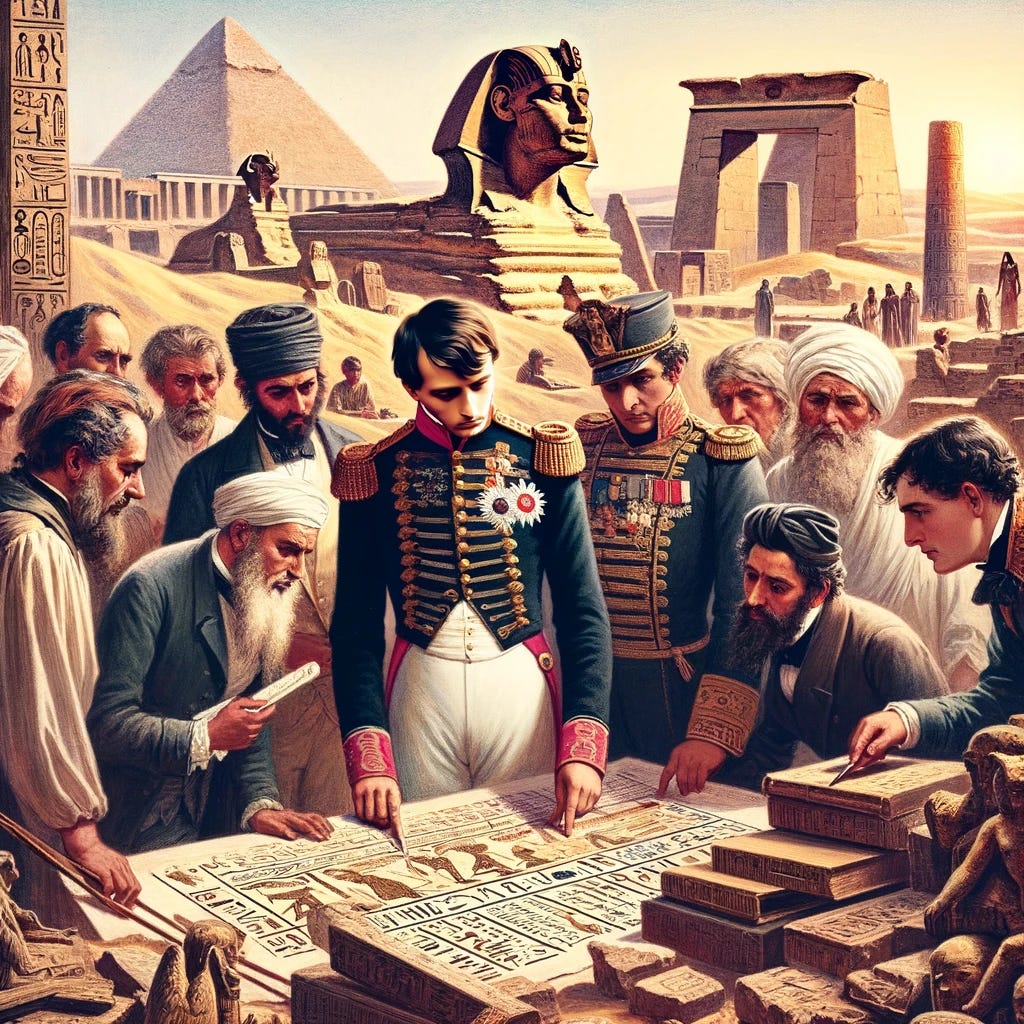
And for centuries, enemies of Islam have been saying, see finally there is a mistake in the Qur'an. Yet, when Napoleon Bonaparte invaded Egypt, he and his team invented a science called Egyptology. They were digging and trying to study the ancient kingdoms of Egypt and they managed to actually decipher hieroglyphics.
And when they deciphered the hieroglyphic writings, they found that on one of the walls, it is written, the chief architect of Iran and his name is Amman. This was only discovered in the 18th century, almost a thousand years after the Qur'an was revealed.
How was it that no one in the entire world knew about Haman, yet Prophet Muhammad, peace be upon him, knew about it? This is another evidence, historical evidence pointing to the miraculous nature of the Qur'an, pointing to the fact that the Qur'an is impossible to have been written by human beings.