

TL;DR:
Day 25 of Be Quranic focuses on Ayat 11 and 12 from Surah al-Baqarah, highlighting the hypocrites' trait of denying truth and rejecting advice.
The lesson emphasises that the source of advice is less important than the advice itself, and true believers should accept truth regardless of its origin.
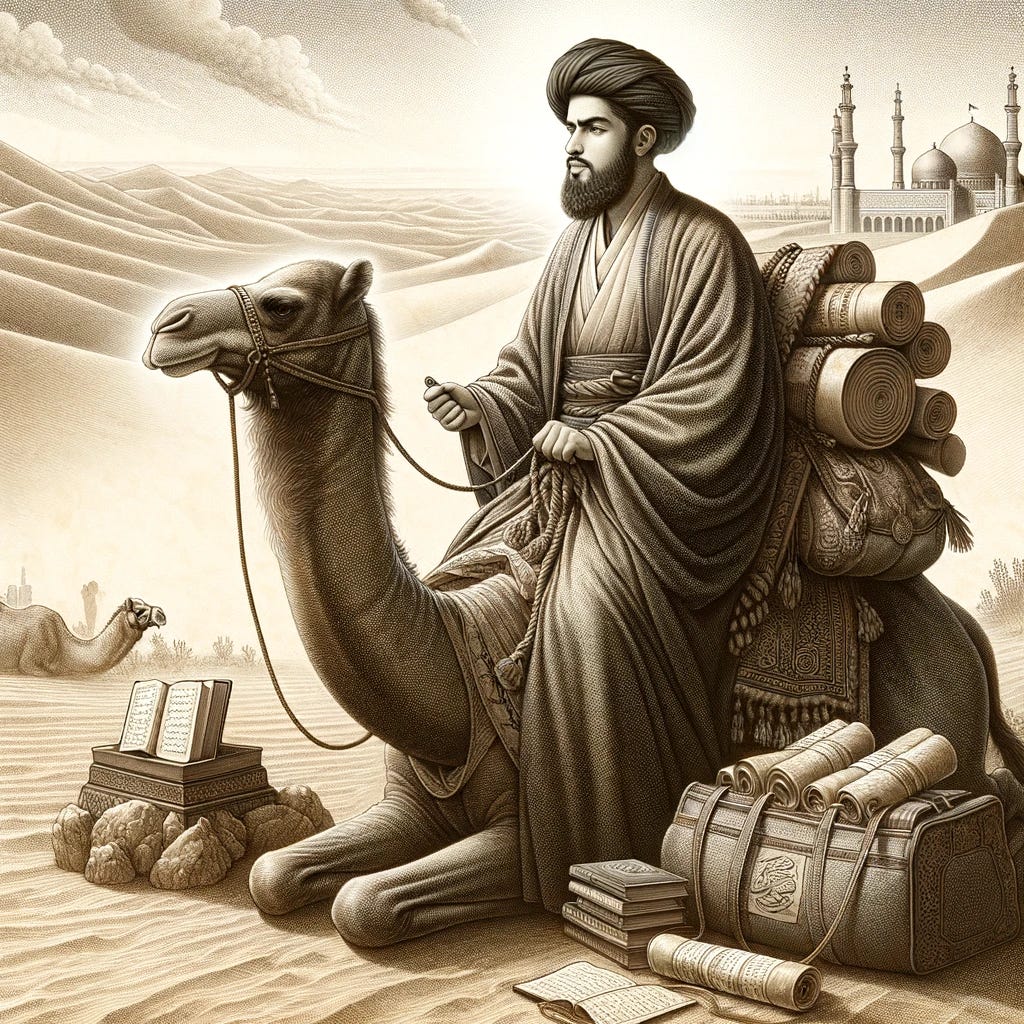
The story of Imam Al-Ghazali, who learned to value knowledge in the heart rather than in books after a robbery, serves as an example of this principle.
The key takeaway is to always accept the truth, no matter where or who it comes from.
This is an AI generated transcript. You can watch the video on Instagram or Tiktok, or listen to it on Spotify.
Welcome to day 25 of Be Quranic, where we take short passages from the Quran daily. We extract practical lessons from them and apply them to our lives so that we can be more Quranic.
Insha'Allah, today we continue our study of the longest Surah in the Quran, Surat al-Baqarah. We are still in the third passage of the Surah, discussing Ayat 11 and 12.
The Ayat read: "And when they are told, 'La tufsidhu fil ardh', do not spread corruption on earth, they say, 'Innama nahnu muslihun', we are only trying to amend things. 'Ala innahum hum al-mufsidun', indeed they are the corrupt, 'Walakin la yash'urun', yet they do not realise it."
In this Ayat, Allah talks about another characteristic of the hypocrites: denying the truth, rejecting advice. The beauty of this ayat is in the use of the phrase 'qeel', 'wa idha qeel'. In Arabic, when you want to say someone said, you can either use 'qala' or 'qeel'. 'Qala' is when you know who is speaking; 'qala' means you know who that 'he' is. 'Qeel' is used when the speaker is unknown.
Allah here uses 'qeel' because when it comes to advice, it is not important who is giving the advice. What is important is the advice itself, the message rather than the messenger. Even if the one delivering the truth is a young child, if it's the truth, you accept it. This is why Allah uses the word 'qeel' rather than 'qala'. A true believer accepts the truth no matter where or who it comes from.
There is something interesting that happened in the life of Imam Al-Ghazali. Imam Al-Ghazali was already a brilliant student from a very young age. In fact, his teacher Imam Al-Haramain, Imam Al-Juwayni Al-Haramain, said that "Dafani wa An-Nahayn", he buried me while I'm still alive.
Imam Al-Ghazali surpassed him so much that he felt he was no longer needed because of him, because he was such a great scholar. So, he travelled around the Muslim world to study. Back then, you didn't just buy books; you had to write them. You had to go to the teacher, to the author, study the book with him, and then write. Either you took dictation or you copied from the original manuscript of the author. It was hard work. And Imam Al-Ghazali travelled around the world.
He had gathered many books and was on his way back with all his books when he got robbed. Highway robbery. He pleaded with the robbers, saying, "You can take anything you want, just leave my knowledge with me," referring to the books.
The robbers laughed at Imam Al-Ghazali, saying, "What kind of knowledge is that if a robber like me can steal it?" Imam Al-Ghazali took it in a very positive light. He said that this must be a reminder from Allah, telling him that he needed to memorize his knowledge.
You see, whoever said it, it was a robber. Imam Al-Ghazali didn't blame the robbers. He just realised that he did something wrong here. This was a reminder from Allah that knowledge should be in the chest, in the heart, not just in books.
So that's our quest from this ayah. We're going to remind ourselves to always take the good from no matter where it comes from. It can be from a young child, from a robber, from some uneducated people; where it comes from, who it comes from, it doesn't matter. The most important thing is the truth remains the truth, and we will always accept the truth in our lives.